If someone had told me that just over a year after founding PGS-Educators we would be holding our first annual event at Lilian Baylis Technology School in front of around 100 attendees, I would have described it as ambitious. What began as a relatively small-scale event far exceeded our expectations, evolving into what many attendees described as the PGS-Educators & SEN Bytes conference.
Throughout my journey with PGS-Educators, I have had the privilege of meeting outstanding educators and professionals who have supported my development as I transitioned from school leadership to becoming a founder. Their guidance, encouragement and belief in our vision have been invaluable. However, one relationship that has particularly reinforced the importance of collaboration and allyship has been my growing partnership with Nana-Kofi Oyere.
Nana founded SEN Bytes around the same time as PGS-Educators, and from our first meeting at the Festival of Education last year, it was evident that he was deeply committed to improving the life chances of young people, particularly those with SEND. We quickly discovered a shared belief in creating spaces where educators, families and professionals could challenge assumptions, reflect on practice and explore what meaningful inclusion looks like for children and young people, especially those at risk of exclusion. We were equally passionate about deepening understanding of the intersection between behaviour and SEND, and how schools can create environments where all pupils feel valued, understood and supported.
Creating Inclusive Pathways gave us the opportunity to bring that vision to life.
What many people do not see is the work that takes place behind the scenes. Although the event lasted only one day, it was the culmination of months of planning, problem-solving and perseverance from our events team. As anyone who has organised an event knows, the journey to delivery is rarely straightforward.
Hosting the event at Lilian Baylis Technology School, where I began my teaching career in 2011, made the occasion even more special. Returning to the school where my professional journey started, this time as a founder and keynote speaker, was a moment of immense pride and reflection.
The event brought together educators, professionals, parents and carers from across the country. Hosted by the exceptional school leader Genevieve Bent MBE, it was clear throughout the day that Creating Inclusive Pathways had been designed with community at its heart. The behaviour, SEND and parent panels generated thoughtful discussion around some of the most pressing issues facing education today. Conversations explored key themes from the recently published White Paper, including the proposed belonging metric and how schools can better measure pupils’ experiences of safety, connection and inclusion. This is particularly significant at a time when more than one in five pupils in England are identified as having special educational needs and disabilities (SEND), according to Department for Education statistics. As schools continue to navigate increasingly complex needs, ensuring every child experiences a genuine sense of belonging must move beyond rhetoric; it is essential if we are to improve outcomes and create truly inclusive learning environments.
There were also important discussions about how we can prevent the pathway from school disengagement to permanent exclusion, highlighting the critical role of early intervention and the importance of identifying and responding to children’s needs from their formative years in primary education.
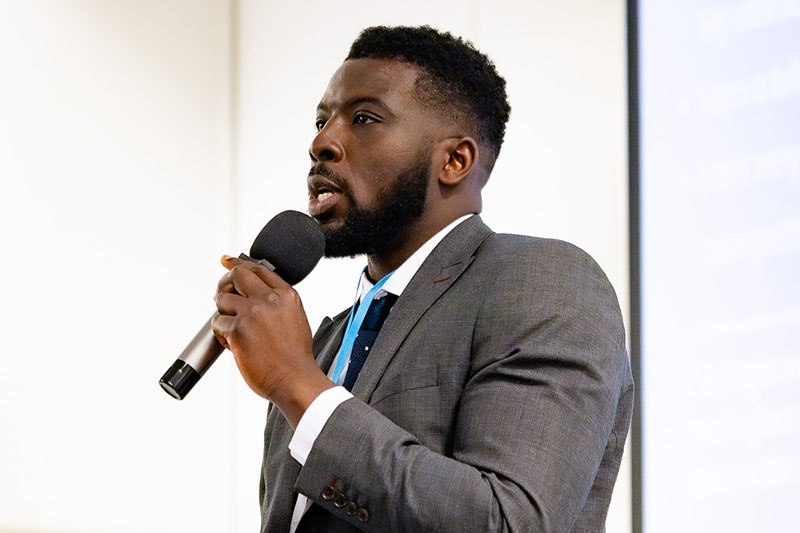
The keynote speeches delivered by Jason McInnis and Patrick Cozier were both inspiring and practical, offering clear examples of how inclusive cultures can be embedded within schools. I also felt privileged to deliver the closing keynote, reflecting on my own lived and professional experiences and the lessons I have learned along the way. Sharing the stage with Elroy Cahill, whose allyship and support have been constant throughout my career, made the occasion even more meaningful.
I must also express my sincere gratitude to Sacred Heart Catholic School and Corpus Christi Primary School for allowing their pupils to speak about the impact of participating in our programmes. While every aspect of the event was important, these contributions were among the most powerful moments of the day.
Our primary school pupil used creative expression to explain the impact of our Social and Emotional Literacy programme. Watching the audience respond with warmth and encouragement, and seeing the pride on the faces of her parents and carers, was a moment I will remember. It was a powerful reminder that inclusion is not a policy debate or abstract idea. It is about the lived experiences of children and the support systems that are put around them to shape their future life chances.
Those moments reinforced the importance of strong relationships between schools and families and ensuring that young people’s voices remain central in education.
As the day came to a close, I felt a deep sense of gratitude. The event was a success, but more importantly, it achieved its purpose. It created a space for meaningful dialogue, challenged thinking and strengthened our collective commitment to inclusive practice for young people, particularly those with SEND.
If Creating Inclusive Pathways demonstrated anything, it is that meaningful inclusion cannot be achieved by schools working in isolation. It requires educators, families, communities and young people to work together with a shared responsibility for belonging, opportunity and understanding. The conversations that began at Lilian Baylis should not end there. If we are serious about reducing exclusions and improving outcomes, collaboration must remain at the heart of our work.
Creating Inclusive Pathways was never simply about hosting an event; it was about showing what is possible when people come together around a shared purpose. For me, the true success of the event was not the attendance or feedback, but the creation of a space where conversations that are often fragmented could happen collectively, with shared responsibility for change.
We are already looking forward to building on this momentum and planning our second event next year. In the meantime, Nana and I will continue these important conversations at the Festival of Education, where we will explore how schools and families can work together to close the gap between pupil behaviour and academic success through inclusive practice.