
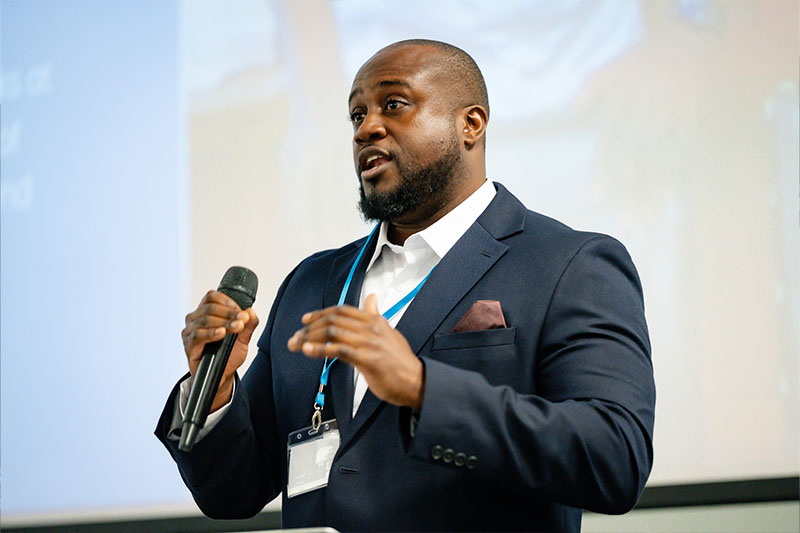
Creating Pathways to Inclusion was an event that meant a great deal to me, not just because of the conversations it created, but because of what it represented. Bringing together parents, educators, leaders and specialists to talk openly about inclusion, behaviour and support for children and young people with SEND felt both timely and necessary.
Throughout the day there was a clear sense of shared purpose. People came together to listen, challenge thinking and explore solutions. While some discussions focused on policy and others on lived experience, all reinforced a key message: meaningful inclusion begins with understanding the individual needs of each child.
What stood out most was the range of voices in the room. Parents shared their experiences, practitioners reflected on their work, and specialists offered insight from years of practice. This collective dialogue reflected what research consistently highlights, that effective SEND support is strongest when it is collaborative, multi-perspective and centred around the child.
Reflecting afterwards, I found myself thinking about my own journey in education. I began as a Teaching Assistant, trying to understand the behaviours, needs and potential of the young people in front of me. I could not have imagined that those early experiences would lead to working across schools, contributing to wider SEND discussions, establishing SEN Bytes, delivering workshops internationally and working within a Local Authority at a strategic level.
Having worked at classroom, school and system level has given me a unique perspective. I have seen both the progress within SEND and the challenges that remain, particularly as the sector prepares for further reform.
Against this backdrop, the event focused on one of the most important and often misunderstood areas of practice: the relationship between SEND and behaviour.
Too often, behaviour is viewed in isolation, labelled as “challenging” or “disruptive”, without considering what may be driving it. However, evidence from areas such as trauma-informed practice and speech and language research consistently shows that behaviour is a form of communication, particularly for children with unmet needs.
A child who struggles to process language may appear disengaged. A young person overwhelmed by sensory input may become dysregulated. If we respond only to the behaviour and not the underlying need, we risk reinforcing the very difficulties we are trying to address.This is why early identification and support are so critical. Research shows that unmet needs, particularly in speech, language, communication and social-emotional development, are strongly linked to increased risk of exclusion. Without timely intervention, behaviour can escalate, leading to placement breakdowns and reduced life chances.
As professionals, we must move beyond reactive responses and ask better questions: What is this behaviour communicating? What support is missing? What barriers are in place?
Inclusion cannot simply exist in policy, it must be visible in everyday practice.
This is also why the intervention work carried out by PGS Educators is so important. Supporting young people at risk of exclusion requires consistency, patience and understanding. Evidence shows that trusted relationships with adults are one of the strongest protective factors for re-engagement in education.
This work is not just about reducing incidents; it is about rebuilding trust, confidence and a sense of belonging in education.
Although every part of the event was meaningful, the parent panel stood out the most.
Hearing parents speak with honesty about their experiences, navigating systems, advocating for their children and often feeling unheard, was powerful. It was a reminder that lived experience must sit alongside professional knowledge. Research increasingly emphasises the importance of co-production with families in achieving better outcomes for children with SEND.
The atmosphere in the room shifted during this session, more reflective, more connected. It reinforced something I have always believed: true inclusion begins with listening.
Another key reflection was the connection to workshops I previously delivered in Ghana. Despite differences in context, the conversations were strikingly similar: how to better understand behaviour, move beyond punitive responses and create environments where young people feel understood.
This reinforced that many of the challenges within SEND are universal, and so is the commitment to improving outcomes.
To everyone who contributed to Creating Pathways to Inclusion, thank you. Events like this matter because they create space for honest conversation, shared learning and collective reflection.
For me, the event was also a reminder of why I started SEN Bytes, to create spaces that challenge thinking while remaining practical, reflective and human.
Creating Pathways to Inclusion showed what is possible when people come together with a shared purpose. The conversations did not end with the event, they have only just begun.
There is still much work to do. But if this event showed anything, it is that there is a growing appetite for change, collaboration and improvement.
Creating pathways to inclusion is not a destination, it is an ongoing journey.